A quiet transformation is taking place in higher education. Students now turn to artificial intelligence not only for answers but for motivation. At the same time, a new generation of effort-sensitive technologies promises to monitor engagement, track persistence, and infer whether learners are truly trying. These systems are beginning to redefine what colleges count as effort and, by extension, what they count as learning. The goals behind these tools are understandable. Designers hope adaptive systems will make education more equitable and responsive by giving students insight into their habits and struggles. At Carnegie Mellon University, for example, Conrad Borchers created Effort-Sensitive AI for Learning to help students visualize their study patterns before frustration sets in. The intention is reflection rather than surveillance.
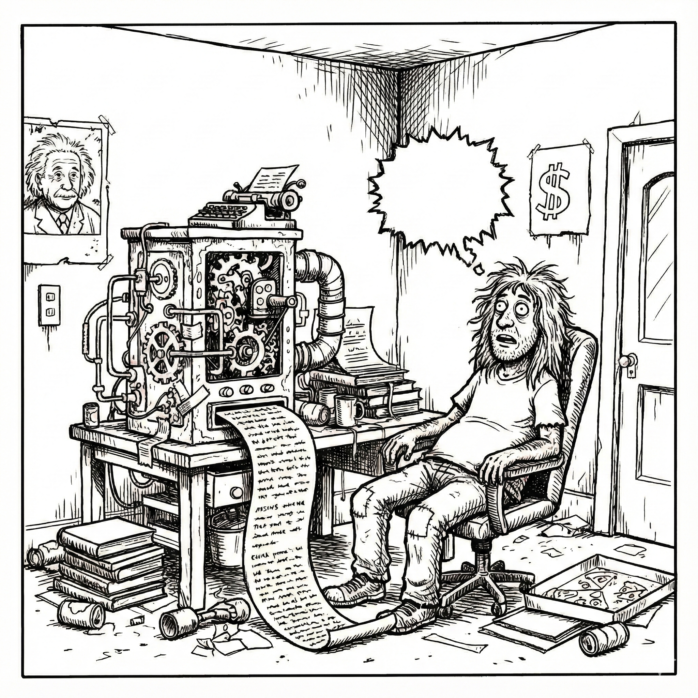 But once activity is translated into data, the data begin to influence the behavior they claim to measure. A brief pause can register as disengagement. Rapid typing can signal focus. Students eventually realize that unseen systems are interpreting their actions and may begin performing for algorithmic approval instead of thinking for themselves. What used to be an exchange between learner and teacher becomes a loop between student and machine. This shift matters because effort is no longer understood through experience but through metrics. In a traditional classroom, effort lived in rereading, revising, and wrestling with ideas. In digital spaces, it gets recorded as keystrokes, session length, and completion rates. These numbers are useful but incomplete. They capture what is visible and overlook what is internal. Confusion, insight, doubt, and breakthrough moments rarely leave a trace.
Yet once metrics appear on dashboards, they start to define achievement. Courses are compared. Instructors are ranked. Automated interventions are triggered. What cannot be measured slowly stops being valued. Md. Kamrul Hasan has described this shift as the loss of the joy of effort. Writing in the Annals of Medicine and Surgery, he argues that learning’s pleasure comes from its difficulty. Struggle activates the brain’s reward system and strengthens motivation. When AI tools deliver instant solutions, that developmental cycle gets bypassed. Hasan calls the result cognitive outsourcing, a quiet erosion disguised as progress.
The appeal of efficiency is powerful. Essays appear in seconds. Equations resolve instantly. But the friction of thinking builds intellectual stamina. Drafting, revising, and doubting give students a sense of ownership that automated shortcuts cannot replace. As more mental labor is delegated to machines, what was once formative becomes optional. The effect is subtle but significant: if technology makes difficulty disappear, it takes much of learning’s meaning with it. Institutions feel the pull of automation as well. Data dashboards promise control over large courses and heavy workloads. They offer early alerts, faster grading, and simplified decision making. Used thoughtfully, these systems can help faculty spot patterns they might otherwise miss. They can highlight when students disengage or when confusion clusters around particular concepts. For overworked instructors, these supports can lead to more timely help.
But the same tools can also sideline professional judgment. When an algorithm flags a student as struggling, administrators may trust the metric more than the instructor who understands that student’s circumstances. Learners who think slowly or in bursts may appear less engaged than peers who click steadily. Creativity often hides in silence, something data rarely captures. When visibility becomes the condition for value, contemplation starts looking like absence.
Students feel these pressures even more. They know they are being observed, measured, and compared, often without understanding the criteria. The resulting anxiety gets folded into the learning process itself. Instead of taking intellectual risks, many aim to satisfy computational expectations. The more these systems expand, the more students encounter the classroom as a site of automated inference rather than human guidance.
Turning away from AI is not realistic. Class sizes continue to grow. Students expect immediate feedback. Faculty workloads rise while staffing and support fail to keep pace. Intelligent systems can reduce some of that strain and improve accessibility for students who learn differently. They can create more space for empathy, provided that educators remain in control of interpretation. That is the real task: balancing the efficiency of AI with the human qualities that sustain learning. Colleges should make clear what data are collected and how they are used. Students should have access to their own analytics. And algorithmic reports should be treated as one form of evidence among many. These systems can illuminate patterns of effort, but they should never define them. Governments are beginning to outline boundaries. The European Commission’s Ethics Guidelines for Trustworthy AI and the White House’s Blueprint for an AI Bill of Rights emphasize accountability and human oversight. Such frameworks matter, but they cannot restore the satisfaction of discovery. That responsibility stays with educators.
History offers reminders of how new technologies reshape learning. The textbook broadened access while standardizing interpretation. The multiple-choice test democratized grading while narrowing inquiry. Effort-sensitive AI continues this pattern. It promises personalization yet imposes a new logic of measurement. Nearly every student gesture can now be recorded and compared. The pace of change is exhilarating and unsettling at once. The question is not whether these systems work. It is what kind of learners and teachers they encourage us to become. The machines are improving quickly. So are we. The test for higher education is whether it can protect the slower virtues that no algorithm can teach. Patience. Reflection. Persistence. And the willingness to wrestle with uncertainty. Preserving those capacities may be the most important human lesson left.