Why Professors Ignore the Science of Teaching

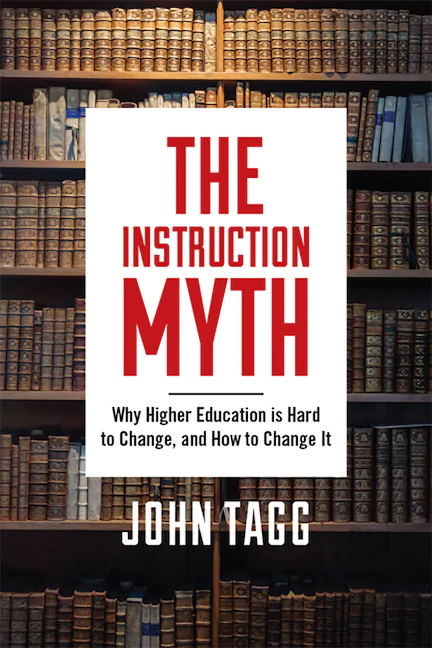
A recent article appearing in the Chronicle of Higher Education explored the apparent reluctance of college and university professors to embrace the growing body of research about how students learn and what teaching methods work best. While many faculty simply cling to what has worked for them in the past, others feel overworked and unable the consider changing. In the meantime, an increasingly diverse student population experiences increasing inequity as a result.

Beth McMurtrie’s “Why the Science of Teaching is Often Ignored” opens with a discussion of a recent study by five Harvard University researchers who published some novel research. The group was trying to figure out why active learning, a form of teaching that has had measurable success, often dies a slow death in the classroom. They compared the effects of a traditional lecture with active learning, where students solve problems in small groups.

The results were not surprising; students who were taught in an active method performed better on standardized tests. The academic press praised the study for its clever design and its resonance with professors who had trouble with active learning. Yet despite being praised in some quarters, the study was criticized in others.

This mixed reaction reveals a central paradox of higher education, according to McMurtrie. Teaching and learning research has grown dramatically over the decades, encompassing thousands of experiments, journals, books, and programs to bring learning science  into classrooms. But a lot of faculty members haven’t read it, aren’t sure what to do with it, or are skeptical. Continue reading “Why Professors Ignore the Science of Teaching”

Treating Students as Suspects

It’s no secret that online learning has its problems, witnessed in the historic failure and drop-out rates resulting from thrown-together course overhauls in the early COVID months. Less widely reported has been another kind of failure owing to a loss faith in educational institutions and a widening trust gap between teachers and students.

Inherent school power inequities  have aggravated  antagonisms – now made even worse by a range of surveillance and security technologies. The distance in “distance learning” can create an atmosphere of alienation and distrust. When the in-person classroom is reduced to a screen image, teachers and students can seem more like abstractions than actual people.

This opens the door for all sorts of communication failures and misunderstandings, not to mention stereotyping and harm. The objectifying tendencies of media representations long have been associated distortions in the way individuals and groups view each other, whether in the marketing of products, sensationalizing news items, or spreading ideologies on social networks. When “Zoom school” does this, underlying beliefs and assumptions can overtake the reality of encounters, generating attitudes that destabilize the learning environment.

These problems have become especially evident in the panic about student dishonesty in online learning, as the absence of classroom proximity quickly escalated in into assumptions of cheating. Early in the 2020s a torrent of news reports warned of an “epidemic” of dishonesty in online learning, with some surveys showing over 90 percent educators believing cheating occurred more in distance education than in-person instruction.[i] New technologies often have stoked such fears, in this instance building on the distrust many faculty hold toward students, some of it racially inflected. [ii] Closer examination of the issue has revealed that much of the worry came from faculty with little direct knowledge of the digital classroom, online student behavior, and preventative techniques now commonly used.  Indeed more recent research has shown no significant differences between in-person and online academic integrity.[iii] Continue reading “Treating Students as Suspects”